
Product Catalog









































Showing 657–672 of 742 results
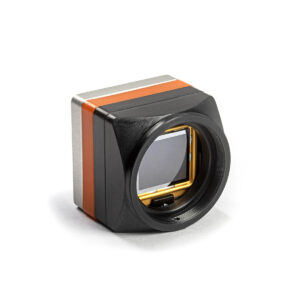
The Dione 1280 CAM series is based on the Dione 1280 OEM thermal imaging core with 1280 x 1024 pixels and 12 μm pixel pitch. The NETD is less than 40 mK (available upon request) or 50 mK. The maximum frame rate is 60 Hz.
The camera cores are optimized for low SWaP (Size, Weight and Power). The Dione 1280 CAM is both lightweight and small. It utilizes Xenics image enhancement for advanced image processing while keeping power consumption low.
Dione 1280 CAM is a LWIR uncooled thermal imaging SWAP module with housing supporting M34/M45 lens (optional).
The ultra-compact Dione 1280 CAM series find application in safety and security systems, as well as in industrial thermal imaging systems.
Benefits & Features
• State-of-the-art 1280 × 1024 microbolometer detector with 12 μm pitch
• Low SWaP (Size, Weight and Power)
• GenICam compliant
• Shutterless and uncooled operation
• Availability of multiple lenses (optional) adds flexibility to integration programs
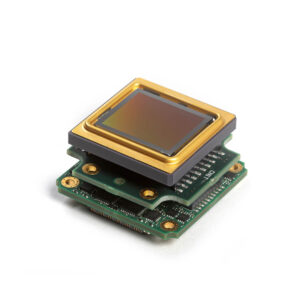
The Dione 1280 OEM series is based on an uncooled 12 μm pitch microbolometer detector with a 1280 × 1024 resolution. The NETD is less than 40 mK (available upon request) or 50 mK.
The cores are optimized for low SWaP (Size, Weight and Power). The overall size of the OEM core is 35 x 35 x 23.5 mm3 and weight is 27 gr. It utilizes Xenics image enhancement for advanced image processing while keeping power consumption low.
All Dione 1280 versions have the same SAMTEC ST5 connector and are GenICam compliant.
The ultra-compact Dione 1280 OEM series find application in safety and security systems, as well as in industrial thermal imaging systems.
Benefits & Features
• State-of-the-art 1280 × 1024 microbolometer detector with 12 μm pitch
• Low SWaP (Size, Weight and Power)
• GenICam compliant
• Shutterless and uncooled operation
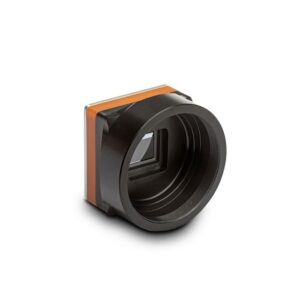
The Dione 320 CAM series is based on an uncooled state-of-the-art 12 μm pitch detector with 320×240 pixels and NETD of less than 40 mK (available upon request) or 50 mK.
The camera cores are optimized for low SWaP (Size, Weight, and Power). The Dione 320 CAM is both light weight and small. It utilizes Xenics image enhancement for advanced image processing while keeping power consumption low.
All Dione 320 versions have the same SAMTEC ST5 connector and are GenICam compliant. Dione 320 CAM is a LWIR uncooled thermal imaging camera SWaP module with housing supporting M24/M34 lens (optional)
The compact Dione 320 CAM series find applications in industrial machine vision, medical, scientific and advanced research, safety and security systems.
Benefits & Features
• State-of-the-art detector with 12 μm pitch
• Industry leading SWaP (Size, Weight and Power)
• GenICam compliant for easy integration
• Shutterless operation
• Availability of multiple lenses (optional) add flexibility to integration programs
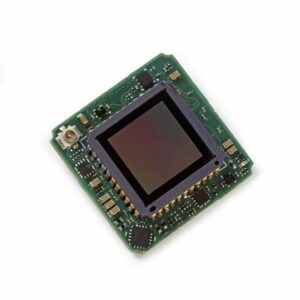
The Dione 320 OEM is based on a state-of-the-art detector with a 320×240 pixels and 12 μm pixel pitch. The NETD is less than 40 mK (available upon request) or 50 mK.
The cores are optimized for low SWaP (Size, Weight and Power). The overall size of the OEM core is 25 x 25 x 10 mm3 and weight is 6 gr. It utilizes Xenics image enhancement for advanced image processing while keeping power consumption low.
All Dione 320 versions have the same SAMTEC ST5 connector and are GenICam compliant.
The compact Dione 320 OEM series find application in industrial machine vision, medical, scientific and advanced research, safety and security systems.
Benefits & Features
• State-of-the-art detector with 12 μm pitch
• Industry leading SWaP (Size, Weight and Power)
• GenICam compliant for easy integration
• Shutterless operation
• High level of tunability for optimal integration into many systems
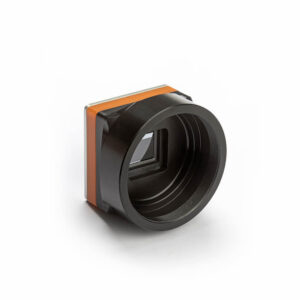
The Dione 640 CAM series is based on the Dione 640 OEM thermal imaging core with 640 x 480 pixels and 12 μm pixel pitch. The NETD is less than 40 mK (available upon request) or 50 mK. The maximum frame rate is 60 Hz.
The camera cores are optimized for low SWaP (Size, Weight and Power). The Dione 640 CAM is both lightweight and small. It utilizes Xenics image enhancement for advanced image processing while keeping power consumption low.
All Dione 640 CAM versions have the same SAMTEC ST5 connector and are GenICam compliant. Dione 640 CAM is a LWIR uncooled thermal imaging SWAP module with housing supporting M24/M34 lens (optional).
The ultra-compact Dione 640 CAM series find application in safety and security systems, as well as in industrial thermal imaging systems.
Benefits & Features
• State-of-the-art 640×480 microbolometer detector with 12 μm pitch
• Low SWaP (Size, Weight and Power)
• GenICam compliant
• Shutterless and uncooled operation
• Availability of multiple lenses (optional) adds flexibility to integration programs
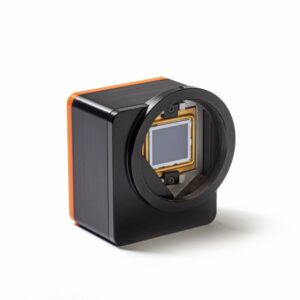
The Dione S 1280 CAM series is based on an uncooled 12 μm pitch microbolometer detector with a 1280 × 1024 resolution and NETD of less than 40 mK (available upon request) and 50 mK.
The camera cores are optimized for low SWaP (Size, Weight and Power). The Dione S 1280 CAM is lightweight and small with mechanical shutter. It utilizes Xenics image enhancement for advanced image processing while keeping power consumption low.
All Dione S 1280 versions have the same SAMTEC ST5 connector and are GenICam compliant. Dione S 1280 CAM is a LWIR uncooled thermal imaging SWAP module with housing supporting M34/M45 lens (optional).
The ultra-compact Dione S 1280 CAM series find application in safety and security systems, as well as in industrial thermal imaging systems.
Benefits & Features
• State-of-the-art 1280 × 1024 microbolometer detector with 12 μm pitch
• Low SWaP (Size, Weight and Power)
• GenICam compliant
• Shuttered and uncooled operation
• Availability of multiple lenses (optional) adds flexibility to integration programs
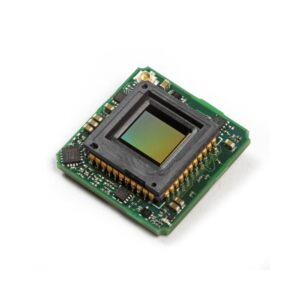
The Dione 640 OEM series is based on an uncooled 12 μm pitch microbolometer detector with a 640 × 480 resolution. The NETD is less than 40 mK (available upon request) or 50 mK.
The cores are optimized for low SWaP (Size, Weight and Power). The overall size of the OEM core is 25 x 25 x 10 mm3 and weight is 6 gr. It utilizes Xenics image enhancement for advanced image processing while keeping power consumption low.
All Dione 640 versions have the same SAMTEC ST5 connector and are GenICam compliant.
The ultra-compact Dione 640 OEM series find application in safety and security systems, as well as in industrial thermal imaging systems.
Benefits & Feature
• State-of-the-art 640×480 microbolometer detector with 12 μm pitch
• Low SWaP (Size, Weight and Power)
• GenICam compliant
• Shutterless and uncooled operation
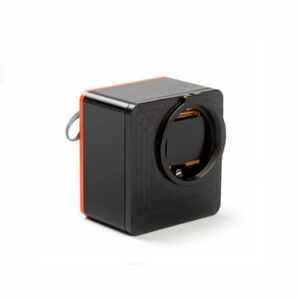
The Dione S 1024 CAM series is based upon the Dione 1024 OEM thermal imaging core with 1024×768 pixels and 12 μm pixel pitch. The NETD is less than 40 mK (available upon request) or 50 mK. The maximum frame rate is 80 Hz.
Dione S 1024 CAM is a LWIR uncooled thermal imaging SWaP module with housing supporting M34/M45 lens (optional).
Dione S 1024 CAM series benefit from Xenics image enhancement for advanced image processing while keeping power consumption low. Moreover, GenICam compliance and the availability of multiple lenses provide a high level of tunability for optimal integration into many systems.
The compact Dione S 1024 CAM series find applications in safety and security, transportation and industrial process monitoring.
Benefits and Features:
• Ultra-compact size, low weight and power (SWaP)
• 1024×768 microbolometer detector with 12 μm pixel pitch
• Frame rates up to 80 Hz
• Detector NETD is less than 40 mK (available upon request) or 50 mK
• Uncooled with mechanical shutter
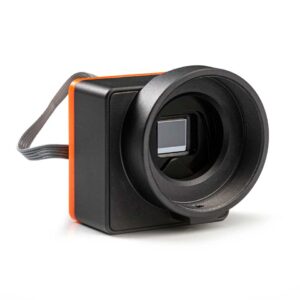
The Dione S 640 CAM series is based on an uncooled 12 μm pitch microbolometer detector with a 640 × 480 resolution and NETD of less than 40 mK (available upon request) and 50 mK.
The camera cores are optimized for low SWaP (Size, Weight and Power). The Dione S 640 CAM is lightweight and small with mechanical shutter. It utilizes Xenics image enhancement for advanced image processing while keeping power consumption low.
All Dione S 640 versions have the same SAMTEC ST5 connector and are GenICam compliant. Dione S 640 CAM is a LWIR uncooled thermal imaging SWAP module with housing supporting M24/M34 lens (optional).
The ultra-compact Dione S 640 CAM series find application in safety and security systems, as well as in industrial thermal imaging systems.
Benefits & Features
• State-of-the-art 640 × 480 microbolometer detector with 12 μm pitch
• Low SWaP (Size, Weight and Power)
• GenICam compliant
• Shuttered and uncooled operation
• Availability of multiple lenses (optional) adds flexibility to integration programs
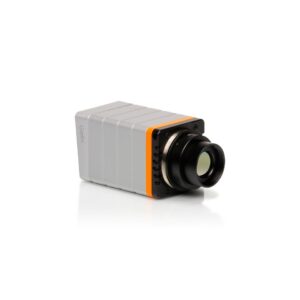
The Gobi+ 640 series is based on an uncooled microbolometer detector with a 640 x 480 pixel resolution.
The Gobi+ 640 offers frame rates up to 60 Hz and lower detector NETD options ( < 30 mK available upon request).
The cameras come with either a CameraLink or GigE Vision interface.
Benefits & Features
• Compact size
• Easy connectivity via multiple interfaces
• Frame rates up to 60 Hz
• Lower detector NETD options ( < 30 mK available upon request)
• Temperature calibrations for thermographic applications
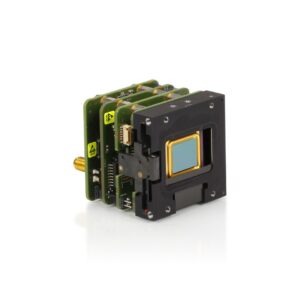
The XTM+ 640 series is based on an uncooled microbolometer detector with a 640 x 480 pixel resolution.
The XTM+ 640 offers frame rates up to 60 Hz and lower detector NETD options ( < 30 mK available upon request).
The modules come with either a CameraLink, GigE Vision or QTE Samtec interface and feature low weight and power.
Benefits & Features
• Compact size
• Easy connectivity via multiple interfaces
• Frame rates up to 60 Hz
• Lower detector NETD options ( < 30 mK available upon request)
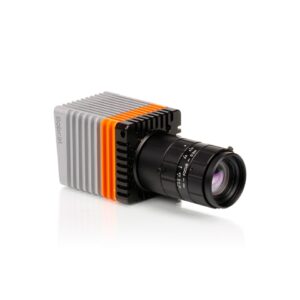
The Bobcat 320 series is based on an in-house developed, temperature stabilised InGaAs detector with a 320 x 256 pixel resolution.
The Bobcat 320 cameras are offered with frame rates of either 100 Hz or 400 Hz. The camera comes with a CameraLink or GigE Vision interface and features low weight and power.
The Bobcat 320 targets cost sensitive volume markets such as laser beam analysis applications, sorting & recycling industry and investigation of defects inside silicon semiconductor material.
Benefits & Features
• Flexible and easy-to-use
• CameraLink or GigE Vision interfacing options
• Low dark current
• Small SWIR area-scan camera
The Bobcat 320 TE0 and WL series are based on an in-house developed, uncooled InGaAs detector with a 320 x 256 pixel resolution.
The Bobcat 320 TE0 and WL cameras are offered with GigE Vision interface, 400 Hz maximum frame rate and feature low weight and power.
The Bobcat 320 WL comes with a windowless uncooled detector, specifically targeting laser beam analysis and laser wavefront sensing applications.
Benefits & Features
• Low cost
• Flexible and easy-to-use
• Low dark current
• High speed 400 Hz
• Windowless version optional (WL)
The Bobcat 640 series is based on an in-house developed, temperature stabilised InGaAs detector with a 640 x 512 pixel resolution.
The Bobcat 640 cameras are offered with high frame rate of 100 Hz. The camera comes with a CameraLink or GigE Vision interface and features low weight and power.
Either for machine vision inspection or scientific research, the compact Bobcat 640 meets requirements of high sensitivity in the SWIR range. We offer a visible enhanced short-wave infrared (vSWIR) option for extended wavelength response into the visible band.
Benefits & Features
• vSWIR optional
• Low noise, low dark current
• CameraLink or GigE Vision interfacing options
• Versatility with gain modes
The Bobcat 320 Gated series is based on an in-house developed, temperature stabilised InGaAs detector with a 320 x 256 pixel resolution.
The Bobcat 320 Gated cameras are able to provide maximum frame rates up to 400 Hz. The exposure time of the sensor is configurable from 100 ns up to 1 ms in steps of 100 ns, or from 1 ms to 40 ms.
The camera comes with either CameraLink or GigE Vision interface.
Benefits & Features
• Extremely short 100 ns integration time
• Programmable trigger-out
• CameraLink or GigE Vision interfacing options
• Small SWIR area-scan camera
The Bobcat+ 320 series is based on an in-house developed, temperature stabilised InGaAs detector with a 320 x 256 pixel resolution.
The Bobcat+ 320 cameras come with GigE Vision interface and offer high frame rates up to 400 Hz. The new and improved Bobcat+ 320 now comes with two gain modes (high gain and high dynamic range) and two read out modes (IWR or ITR). Moreover, a vSWIR version is also available.
The Bobcat+ 320 targets machine vision, safetey and security, scientific research, and process monitoring.
Benefits & Features
• Flexible and easy-to-use
• GigE Vision interface
• Low dark current
• SWIR or vSWIR
• High frame rate of 400 Hz
• IWR or ITR read out
 +65 6748 5517
 info@jm-vistec.com
 10 Kaki Bukit Ave 1, #07-06, Singapore 417942