
Product Catalog







































Showing 49–64 of 742 results
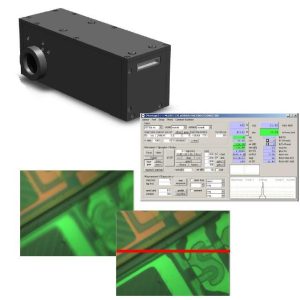
Auto Focus & Tracking for automated optical inspection (AOI) Systems and industrial microscopes
Applicable to Plan Apo lenses 1x-150x, VIS, IR & UV
Full laser line with segment processing
Extreme robust focus results by interactive selection of best focus parameters
Motor controller interface with analog & digital outputs for a seamless closed loop integration with third party’s stepper motor-, piezo-, voice-coil- or servo drives
Applicable to Plan Apo lenses 1x-150x, VIS, IR & UV
Adjustable laser power limitation
User interface with enhanced network capabilities for multi sensor operation
Easy integration of UI functions into the customer software without software library needed
Full laser line with segment processing
The unique correlation processing focus technology enables auto focus where other laser or image auto focus systems fail
Extreme robust focus results by interactive selection of best focus parameters
Motor controller interface with analog & digital outputs for a seamless closed loop integration with third party’s stepper motor , piezo , voice-coil or servo drives
Applicable to Plan Apo lenses 1x-150x, VIS, IR & UV
Adjustable laser power limitation
User interface with enhanced network capabilities for multi sensor operation
Easy integration of UI functions into the customer software without software library needed
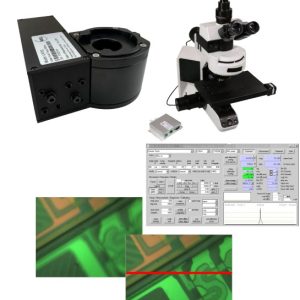
Adapters available for a range of different microscopes
Motor controller interface with analog & digital outputs for a seamless closed loop integration with third party’s stepper motor, piezo, voice-coil or servo drives
Unique Correlation Processing laser focus method
Full laser line with segment processing
Applicable to Plan Apo lenses 1x-150x, VIS, IR & UV
Adjustable laser power limitation
User interface with enhanced network capabilities for multi sensor operation
Easy integration of UI functions into the customer software without software library needed
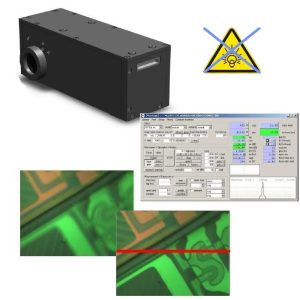
Auto Focus & Tracking for automated optical inspection (AOI) Systems and industrial microscopes
Applicable to Plan Apo lenses 1x-150x, VIS, IR & UV
Built in optical protection against strong light or laser sources which can disturb the focus measurement
Full laser line with segment processing
Extreme robust focus results by interactive selection of best focus parameters
Motor controller interface with analog & digital outputs for a seamless closed loop integration with third party’s stepper motor-, piezo-, voice-coil- or servo drives
Applicable to Plan Apo lenses 1x-150x, VIS, IR & UV
Adjustable laser power limitation
User interface with enhanced network capabilities for multi sensor operation
Easy integration of UI functions into the customer software without software library needed
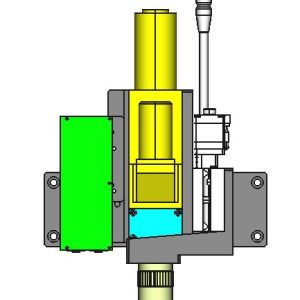
Automated microscope for single lens
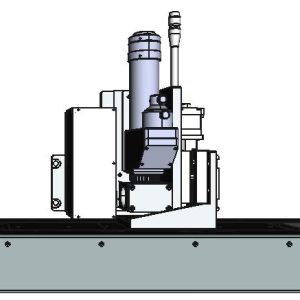
Automated microscope
payload with lens changer
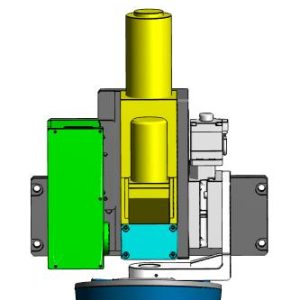
Automated microscope with rotary lens changer
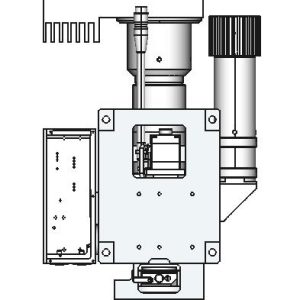
Automated Differential Interference Contrast microscope
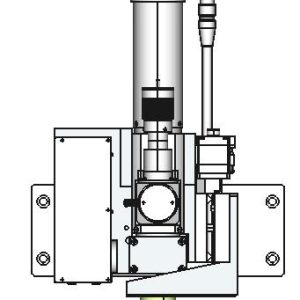
Automated wide field of view microscope for single lens
![Opto Engineering - Telecentric [TC2HMR Series]](https://www.jm-vistec.com/wp-content/uploads/2026/03/TC2HMR-300x300.png)
TC2MHR series features high-resolution telecentric lenses designed for sensors up to 1″ and is the perfect choice for advanced metrology applications. Our TC2MHR series ensures unmatched resolution, low distortion and homogeneous image quality while offering the best performance-to-price ratio.
Thanks to their compact and robust design, TC2MHR lenses can be easily integrated in industrial environments. Additionally, the set screws positioned in the eyepiece allow to easily adjust the camera phase.
![Opto Engineering - Telecentric [TC3MHR Series]](https://www.jm-vistec.com/wp-content/uploads/2026/03/TC3HMR-300x300.png)
TC3MHR series features high-resolution telecentric lenses designed for sensors up to 1.1″ and is the perfect choice for advanced metrology applications. Our TC3MHR series delivers unmatched resolution thanks to the low F# as well as low distortion and homogeneous image quality while offering the best performance-to-price ratio.
The compact and robust design of TC3MHR lenses allows easy integration in industrial environments. Additionally, the camera phase can be easily adjusted by simply loosening the set screws positioned in the eyepiece.
![Opto Engineering – 360° view [HC SERIES]](https://www.jm-vistec.com/wp-content/uploads/2026/03/HC-series-300x300.png)
HC series features hypercentric lenses for sensors up to 1.1” designed for the simultaneous inspection of the inner sides and bottom surfaces of hollow cylindrical samples of various diameters, such as bottles, cans, vials, threaded holes, and tubes.
HC lenses image the inside of cavities from the outside thanks to the special optical path of the rays passing through bottlenecks and narrow openings. This unique optical design allows to fully inspect the inside surfaces of cavities without the need to rotate the sample or use complex multi-camera systems.
In addition, HC lenses feature variable iris for maximum flexibility and a wide viewing angle to clearly image the features of interest.
HC lenses are available in three different versions:
Hypercentric lenses innovative optical design has been optimized to image inner defects in containers and cavities, specifically for the beverage, pharma, cosmetics and metal industries but also to generally inspect hollow objects in many other industry sectors.
![Opto Engineering – 360° view [PC SERIES]](https://www.jm-vistec.com/wp-content/uploads/2026/03/PC-series-300x300.png)
PC pericentric lenses are unique 360° view lenses designed to perform all-round inspection of objects from 2 mm up to 65 mm in diameter, quickly and reliably.
The innovative design allows one camera to see the top and lateral surfaces of an object in perfect focus all in one image. This allows you to greatly simplify the layout of the vision system, with no need for multiple cameras, lenses or mirrors.
The term pericentric comes from the specific path of the light rays: the lateral surface of the object appears to be wrapped around the top face, making the PC series ideal for cylindrical objects which are very common in the beverage, pharmaceutical, automotive and metal industry.
Typical applications include bottleneck thread inspection and data matrix reading – the code will always be properly imaged regardless of its position.
![Opto Engineering – 360° view [PCBP SERIES]](https://www.jm-vistec.com/wp-content/uploads/2026/03/PCBP-300x300.png)
PCBP probes are used to inspect hollow objects such as engine parts, containers and tubes whose hidden features can only be controlled by introducing a probe into the cavity. The catadioptric (refracting + reflecting) optical design ensures much higher resolution than fiber-based probes and enables the complete 360° inner view of the entire cavity. Boroscopic probes are intended to be handled by a robot arm or S.C.A.R.A. in order to scan even the deepest cavities. Built-in illumination keeps the device very compact and makes it suitable for simple 3D applications by means of panoramic triangulation techniques.
PCBP series also features new models with integrated Optotune liquid lenses for immediate focusing at different working distances (PCBP-AF). The integration of the liquid lens technology into the optical design of the boroscopic probes ensures optimal performances and maximum flexibility.
![Opto Engineering – 360° view [PCCD SERIES]](https://www.jm-vistec.com/wp-content/uploads/2026/03/PCCD-300x300.png)
PCCD series features catadioptric lenses exclusively developed and manufactured by Opto Engineering® to enable the 360° top and side view of objects with a single camera.
Their innovative optical design, based on a catadioptric system, makes it possible to image objects of different diameters, ranging from 7.5 mm to 110 mm.
The sides of the object are imaged through the catadioptric system, while the top surface is imaged directly onto the center of the sensor area, allowing for a complete and perfectly focused view of the inspected object.
In addition, the sides of the object being inspected are observed at a wide viewing angle of 35°: this allows to clearly image the features of interest even when inspecting complex geometries.
The compactness and high resolution of these lenses make them ideal to inspect components like pharmaceutical containers, plastic caps, pre-forms, bottlenecks, screws and other threaded objects.
![Opto Engineering – 360° view [PCHIL SERIES]](https://www.jm-vistec.com/wp-content/uploads/2026/03/PCHIL-300x300.png)
Opto Engineering® PCHIL series features hole inspection lenses for the inner inspection of cavities and containers in perfect focus.
Unlike common optics which can only image flat fields of view, these lenses are specifically designed to image both the inner bottom and vertical walls of cavities, cylinders, cones, bottles or threaded objects from the outside.
Thanks to the large angle of view of 82° and the innovative optical design with variable iris and large aperture, these lenses are compatible with a wide range of inspections and different object diameters.
PCHIL series also includes models with integrated Optotune liquid lens technology (-EL models) to provide the flexibility of an immediate and precise remote focusing. This can be extremely useful, for example, for the inspection of complex objects with diameters of various sizes.
 +65 6748 5517
 info@jm-vistec.com
 10 Kaki Bukit Ave 1, #07-06, Singapore 417942