
Product Catalog










































Showing 1–16 of 151 results
![ATIK CAMERAS [ C9]](https://www.jm-vistec.com/wp-content/uploads/2026/04/C9-300x300.png)
![ATIK CAMERAS [ ChemiMOS 9]](https://www.jm-vistec.com/wp-content/uploads/2026/04/ATIK_ChemiMOS9_2-300x300.png)
![ATIK CAMERAS [12 K]](https://www.jm-vistec.com/wp-content/uploads/2026/04/ATIK-12-K-300x300.png)
![ATIK CAMERAS [ACIS 12.3]](https://www.jm-vistec.com/wp-content/uploads/2026/04/ATIK_ACIS-2.4-300x300.png)
The ATIK ACIS 12.3 is a large-format CMOS camera equipped with the Sony IMX304 sensor, delivering maximum detail and high fidelity for precision imaging tasks where every pixel matters.
Performance Specifications
– Resolution: 12.3 megapixels (4096 × 3000 pixels)
– Sensor size: 14.2 × 10.4 mm (17.6 mm diagonal)
– Full-well capacity: Not specified (implied high dynamic range)
– Dark current: ~0.027 e⁻/pixel/sec at -10°C
– Frame rate: 15.5 FPS
– Thermoelectric cooling: 35°C below ambient
– Exposure range: 0.001 seconds to 1 hour
Key Features
– 12.3 megapixels of detail across a large-format sensor for imaging tasks requiring maximum spatial fidelity
– Global shutter prevents distortions in moving scenes, enabling deployment in high-detail, dynamic environments
– Robust thermal management with 35°C cooling delta ensures exceptional low-noise performance for exposures up to 1 hour
– High signal-to-noise ratio and deep bit depth deliver clean, accurate data optimized for AI and machine learning analysis
– Compact package redefines possibilities in high-precision imaging, reducing risk of false positives/negatives in automated classification systems
The ATIK ACIS 2.4 is a high-speed CMOS camera powered by the Sony IMX249 sensor, designed for industrial inspection, robotic vision, traffic monitoring, and machine learning environments where crisp detail and efficient data handling are critical.
Performance Specifications
– Resolution: 2.3 megapixels (1920 × 1200 pixels)
– Sensor size: 11.4 × 7.2 mm (13.4 mm diagonal)
– Pixel size: 5.86 μm
– Full-well capacity: 33,000 e⁻
– Read noise: 3 e⁻
– Dark current: 0.03 e⁻/pixel/sec at -10°C
– Frame rate: 31 FPS
– Thermoelectric cooling: 35°C below ambient
– Maximum exposure: Up to 1 hour
Key Features
– Global shutter architecture captures every pixel simultaneously, eliminating motion distortion for high-velocity objects—unlike rolling shutter alternatives
– High-speed 31 FPS frame rate enables speed-sensitive imaging without compromise
– Large 33,000 e⁻ well depth maintains excellent signal-to-noise performance across bright and dark regions, offering wide dynamic range for unpredictable lighting
– Ultra-low read noise and minimal dark current ensure clean, usable long exposures
– Compact, mechanically flexible design with efficient TE cooling allows easy integration into space-constrained OEM devices, laboratory setups, and industrial rigs
![ATIK CAMERAS [ACIS 7.1]](https://www.jm-vistec.com/wp-content/uploads/2026/04/ATIK_ACIS2.4_1-300x300.png)
The ATIK ACIS 7.1 is a high-resolution CMOS camera built on the Sony IMX428 sensor, designed for applications requiring higher spatial detail and field of view without the computational overhead of very large sensor formats.
Performance Specifications
– Resolution: 7.1 megapixels (3208 × 2200 pixels)
– Sensor size: 14.5 × 10 mm (17.6 mm diagonal)
– Pixel size: 4.5 μm
– Full-well capacity: 25,000 e⁻
– Read noise: 3 e⁻
– Dark current: 0.03 e⁻/pixel/sec at -10°C
– Frame rate: 25 FPS
– Thermoelectric cooling: 35°C below ambient
– Mount options: M42 (T-mount) or C-mount
Key Features
– 4.5 μm pixels balance sensitivity with resolution, capturing fine detail at production-line speeds
– Global shutter design guarantees distortion-free captures for dynamic, high-velocity applications
– Clean, accurate imaging across a wide dynamic range adapts equally to bright environments and low-light scenes where SNR is critical
– Compact mechanical footprint with flexible mounting options enables easy integration into medical imaging systems, industrial vision platforms, and OEM devices
– Stable thermal performance with proven 35°C cooling delta ensures consistent operation during extended use
![ATIK CAMERAS [Apx26]](https://www.jm-vistec.com/wp-content/uploads/2026/04/ATIK_APX26_1-300x300.png)
![ATIK CAMERAS [Apx60]](https://www.jm-vistec.com/wp-content/uploads/2026/04/ATIK_APX60_2-300x300.png)
The **ATIK Apx60** is a high-performance cooled camera optimized for demanding imaging applications. It features a 3.76 μm pixel size with a full well capacity of 51,000 electrons, delivering exceptional resolution and wide dynamic range to accurately capture both faint and bright structures. With read noise as low as 1.2 e⁻ in High Gain Mode and ultra-low dark current of 0.002 e⁻/s/px at -15°C, the camera enables ultra-long exposures up to 24 hours with outstanding stability. Advanced thermoelectric cooling reduces sensor temperature by 35°C below ambient, effectively eliminating thermal noise during extended sessions. The Apx60 combines robust, durable construction with a compact form factor for straightforward installation and repeatable performance in challenging conditions.
![ATIK CAMERAS [TE-47]](https://www.jm-vistec.com/wp-content/uploads/2026/04/TE-47-300x300.png)
Based on the format provided, here is the TE-47 summary:
—
The ATIK TE-47 is a compact, research-grade CCD camera built around the proven e2v CCD 47-10 sensor, delivering uniform imaging performance across a manageable field of view for researchers and engineers.
Performance Specifications
– Resolution: 1 megapixel (1024 × 1024 pixels)
– Sensor size: 13.3 × 13.3 mm (square format)
– Pixel size: 13 μm
– Full-well capacity: 100,000 e⁻ (deep dynamic range)
– Thermoelectric cooling: 40°C below ambient
– Shutter: Optional physical shutter for precise frame control
Key Features
– CCD sensitivity with exceptional uniformity and image stability across temperature ranges
– Deep dynamic range captures both faint details and bright structures without saturation, ideal for high-contrast scenarios
– Hardware shutter enables temporal control superior to modern CMOS sensors, minimizing motion artifacts and supporting synchronized multi-camera systems
– Efficient, low-maintenance TE cooling—no additional infrastructure required
– Consistent performance across long sessions with stability for repeatable results
– Suitable for laboratory and field use
– Supports calibration workflows including dark frame subtraction
![ATIK CAMERAS [TE-77]](https://www.jm-vistec.com/wp-content/uploads/2026/04/Banner-Inicial_TE77-300x300.png)
The ATIK TE-77 is the powerhouse of the TE series, built around the e2v CCD 77 sensor for applications where sensitivity, depth, and dynamic range outweigh pixel count.
Performance Specifications
– Resolution: 512 × 512 pixels (0.26 megapixels)
– Sensor size: 12.3 × 12.3 mm
– Pixel size: 24 μm (extra-large)
– Full-well capacity: 315,000 e⁻ (unmatched capacity)
– Dark current: 0.0005 e⁻/px/s at -20°C
– Thermoelectric cooling: 40°C below ambient
– Exposure range: 0.01 seconds to 24 hours
– Frame rates: 3.678 FPS (preview), 0.688 FPS (low noise), 0.361 FPS (lowest noise)
– Shutter: Optional physical shutter for precise exposure timing
Key Features
– Extra-large 24 μm pixels deliver extraordinary photon capture efficiency, ensuring no signal goes to waste in extremely low-light environments
– Unmatched 315,000 e⁻ full-well capacity enables enormous signal accumulation before saturation, ideal for high-dynamic-range scenarios
– Ultra-low dark current combined with robust TE cooling virtually eliminates thermal noise during multi-hour exposures
– Hardware shutter minimizes motion artifacts and enables synchronized multi-camera arrays with exact timing control
– Marathon imaging capability supports exposures up to 24 hours for recording slow processes or accumulating extremely faint signals
– Adaptable frame rates allow workflow optimization—from fast preview alignment to maximum sensitivity for final data collection
![ATIK CAMERAS [XGbE-60]](https://www.jm-vistec.com/wp-content/uploads/2026/04/ATIK_XGBE60_1-300x300.png)
The XGbE-60 is a high-performance network camera built for complex, multi-camera setups. It uses a full-frame Sony IMX455 sensor (61MP) for exceptional image detail, connects natively via 10 GbE Ethernet for fast, long-distance, scalable deployment, and is designed to be straightforward to configure and manage.
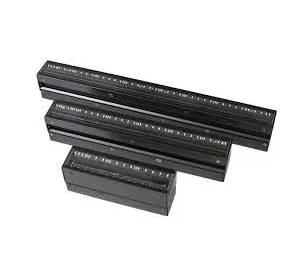
The Canon IDC Series SLIM & ALL IN ONE (IDCCFC-165C, IDCCFC-330C, IDCCFC-476C) is a CIS type line scan camera developed by Canon Components, Inc. for industrial surface inspection applications. Designed as a slim, compact all-in-one unit, it integrates optics, illumination, and imaging into a single housing, eliminating the need for external lighting setups.
Available in three scanning widths, the series supports resolutions of 600, 300, 200, and 150dpi, with both color and monochrome modes and a scan speed of up to 36m/min at 600dpi color. It communicates via Camera Link® and is suited for demanding machine vision tasks including print inspection, film, measurement, and web inspection.
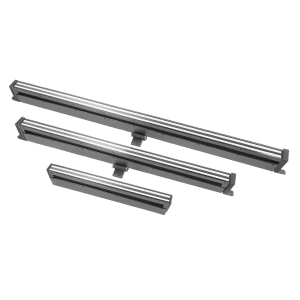
The Canon IDCCFC Series (IDCCFC-659, IDCCFC-943, IDCCFC-1318) is a CIS type line scan camera by Canon Components, Inc., designed as the ultimate solution for wide format and glossy surface inspection. Featuring built-in custom designed diffuse illumination, it delivers reliable and consistent imaging on reflective and high-sheen materials where conventional cameras fall short.
Available in scanning widths up to 1318mm, the series supports resolutions of 600, 300, 200, and 150dpi in both color and monochrome modes, with scan speeds reaching up to 648MPM in monochrome fast mode. Operating on a single 24V power supply and Camera Link® compliant, it integrates easily into existing machine vision systems.
Ideal for a wide range of demanding inspection applications including metal, textile, film, web, wafer, measurement, and print.
![JAI CAMERAS - [APEX MEDICAL SOLUTIONS SERIES]](https://www.jm-vistec.com/wp-content/uploads/2026/04/jai-camera-1-300x300.png)
The Apex Medical & Life Sciences Solutions is a series of 3-CMOS area scan cameras designed for medical imaging and life sciences applications. The system uses multi-sensor prism technology to deliver improved color fidelity and spatial accuracy compared to Bayer-pattern color cameras.
The cameras use a USB3 Vision interface, providing reliable high-speed data transfer and plug-and-play compatibility.
Fully integrated with microscopy imaging platforms:
![JAI CAMERAS - [APEX SERIES]](https://www.jm-vistec.com/wp-content/uploads/2026/04/apex-series-1-300x300.png)
Prism-based 3-sensor RGB cameras delivering highly accurate color and superior spatial resolution for demanding color machine-vision applications.
Key points:
– Sensor/optics: 3-sensor R–G–B prism design with hard dichroic prism filters for steep spectral cutoffs and pure channel separation (no Bayer interpolation).
– Image quality: True per-pixel RGB raw data, higher color fidelity, better edge definition and finer detail resolution than Bayer cameras.
– Models & resolutions: Ten models — 1.6, 3.2, and 5.1 MP variants (AP-1600T, AP-3200T, AP-5100T).
– Sensors: Built on Sony Pregius / Pregius S sensors (IMX273, IMX265, IMX252, IMX548).
– Performance: Frame rates 12–126 fps depending on model and interface.
– Channel control: Independent analog gain and exposure per R/G/B channel for optimized SNR.
– Features: Pixel binning for improved sensitivity; Xscale sub-pixel rescaling on AP-5100T for tailored pixel size/sensitivity/resolution.
– Color processing: In-camera color-space conversions (RGB→HSI, RGB→CIE XYZ, RGB→sRGB/Adobe RGB).
– Interfaces: GigE Vision, Mini Camera Link, USB3 Vision, CoaXPress.
– Applications: Ideal for pharmaceutical, electronics, printing/packaging, microscopy, medical diagnostics where precise color and fine detail matter.
![JAI CAMERAS - [FUSION FLEX EYE]](https://www.jm-vistec.com/wp-content/uploads/2026/04/flex-eye-300x300.png)
Multispectral cameras customized to your application requirements.
JAI’s innovative Flex-Eye technology lets you design the perfect multispectral camera to meet the needs of your imaging system. Flex-Eye combines JAI´s Fusion Series of prism-based multispectral area scan cameras with a custom design process where you specify the number of wavebands, the sensor resolution, and the ideal spectral range for each channel in your multispectral camera.
How it works(Customization Process – JAI Flex-Eye Technology)
The Sony IMX273 CMOS Sensor (1.6 MP per waveband) and Sony IMX252 CMOS Sensor (3.2 MP per waveband) provide high image quality and fast frame rates, supporting up to three simultaneous wavebands at full resolution. A Bayer sensor option in the visible spectrum can also be used for interpolation or additional spectral data extraction during post-processing.

JAI’s prism technology splits incoming light into multiple sensors through a single optical path, ensuring simultaneous capture and precise pixel alignment across all wavebands, eliminating the need for software-based alignment. 10 GigE multi-stream interfaces allow independent or combined analysis of each waveband, with auto-negotiation to adjust to slower network speeds when required.
Support for hundreds of applications and configurations
The versatility of the Flex-Eye solution creates hundreds of different possibilities for a wide range of multispectral imaging applications such as those shown below. You define the exact spectral configuration that will give your vision system the capabilities and the competitive edge that you are looking for.
 Crop health, intelligent farming, environmental studies… |  Surgical guidance, life sciences, forensics… |  Electronics, recycling, scientific research… |
 Inspection of fruits, vegetables, nuts, grains, tea leaves… |  Currency inspection, passports, biometrics… |  Pharmaceuticals, cosmetics, and their packaging… |
Here are just a few of the multispectral configurations possible with Flex-Eye
 |  |  |
 |  |  |
 +65 6748 5517
 info@jm-vistec.com
 10 Kaki Bukit Ave 1, #07-06, Singapore 417942